








Risk management
Basic approach to risk management
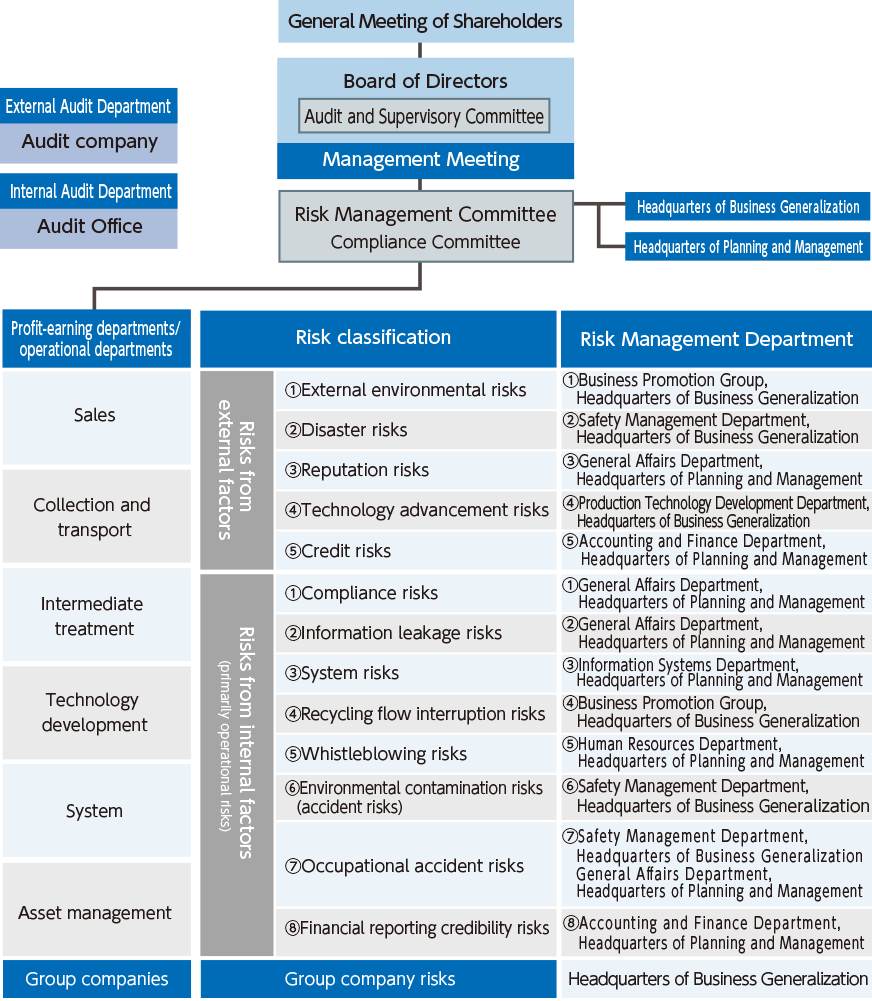
Daiseki established Risk Management Regulations in 2006 to address various risks including earthquakes and other natural disasters, occupational accidents and information leaks. In addition, we created a risk map and established a response system which defines the responsible departments for each risk classification.
The Risk Management Committee, which plays a central role in risk management, is chaired by the President and Representative Director and manages the risks for the Daiseki Group thoroughly and comprehensively. The Audit Office audits the risk management status of each department and periodically reports the results to the Risk Management Committee and the Board of Directors, which deliberate and decide on improvement measures.
In addition, from FY2022, the Sustainability Headquarters and Risk Management Committee have deliberated on climate change risk analysis based on the TCFD recommendations. The progress of this is checked at the Management Meetings and then reported to the Board of Directors.
Overview of risk management structure
Revised March 1, 2020
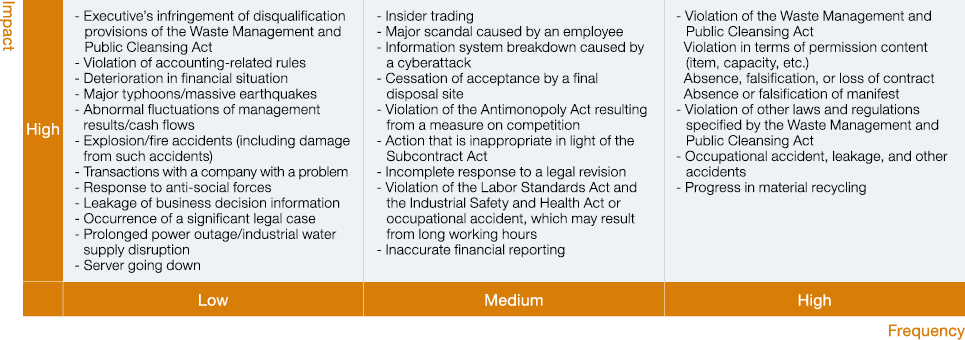
Risk maps and responses
The Daiseki Management Committee periodically identifies and reviews the risks based on the situation of business activities, the social conditions, and the situations of internal and external stakeholders.
Risk map
*Risks with a high level of impact only
We are strengthening our safety management and compliance as we judge that the greatest risks are violations of laws and regulations such as the Waste Management and Cleaning Law, and accidents such as industrial accidents and leaks. In addition, we are developing new businesses and conducting research and development in order to respond to the progress in material recycling.
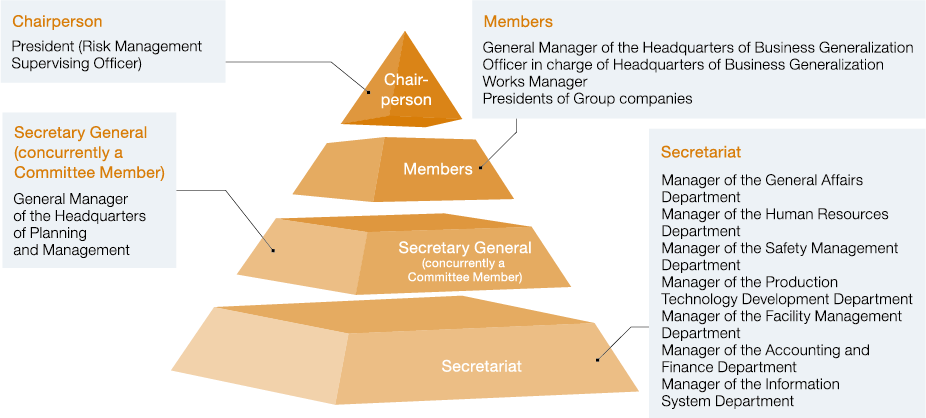
Risk Management Committee composition and matters implemented
The Daiseki Group has established a Risk Management Committee, chaired by the President, who is the Risk Management Supervising Officer. The Committee collects information related to risk management and raises awareness of it, and also formulates and implements countermeasures. In the course of carrying out such activities, if any conduct that impedes the performance of our business is found, we will promptly take measures to correct such conduct.
Matters implemented by the Risk Management Committee
- (1)Matters concerning policies, systems, and countermeasures related to the risk management of the Group
- (2)Matters concerning the collection of information on risks that may impact us and concerning measures against said risks
- (3)Matters concerning awareness-raising activities related to the prevention of potential risks
- (4)Matters concerning the formulation and operation of risk management measures
- (5)Matters concerning comprehensive coordination related to risks to the divisions, departments, etc. of the Group
- (6)Other necessary matters concerning risk management